La Espera
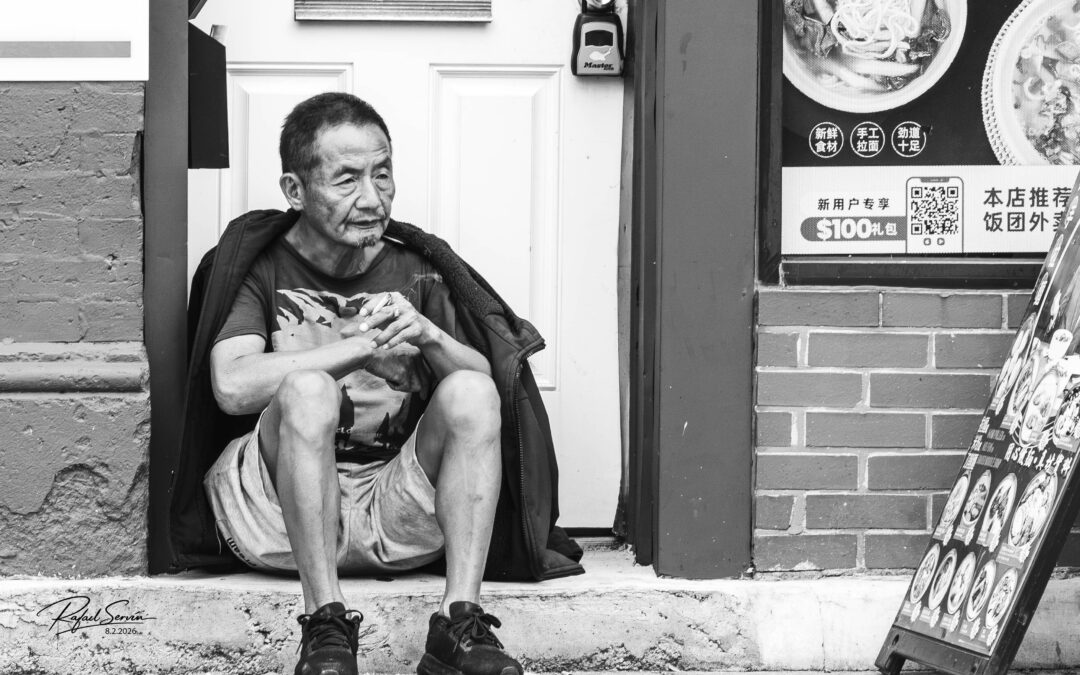
Cuando vi la primera fotografía del hombre sentado pensé:
¿Qué espera?
Sentado frente a una puerta, un hombre observa el paso del tiempo mientras el humo de su cigarro se desvanece lentamente. A su alrededor, la ciudad continúa: personas que van y vienen, negocios abiertos y enormes fotografías de comida que prometen abundancia.
No sabemos su historia, ni podemos asegurar qué espera o cuáles son sus circunstancias. Pero la escena provoca preguntas.
Las colillas acumuladas a sus pies sugieren permanencia; su postura y su mirada parecen hablar de horas que transcurren sin prisa. Frente a él, los anuncios de comida crean un contraste inevitable entre la abundancia que se exhibe y la necesidad que imaginamos.
Tomé la fotografía desde unos veinte metros de distancia, sin intervenir en el momento. El humo quedó suspendido frente a su rostro por apenas un instante, como si también estuviera esperando.
“La Espera” no pretende explicar quién es este hombre.
Pretende detenernos frente a él.
Porque algunas veces la fotografía no necesita conocer una historia para contarla; basta con observar aquello frente a lo que los demás continúan caminando.
English Translation:
The Wait
Seated in front of a doorway, a man watches time pass as the smoke from his cigarette slowly fades into the air. Around him, the city carries on: people come and go, businesses remain open, and oversized photographs of food promise abundance.
We do not know his story, nor can we say what he is waiting for or what circumstances have brought him here. But the scene invites questions.
The cigarette butts gathered at his feet suggest he has been there for quite some time. His posture and distant gaze seem to speak of hours passing without urgency. Across from him, the food advertisements create an unavoidable contrast between the abundance on display and the need we cannot help but imagine.
I took this photograph from about twenty meters away, without interrupting the moment. The smoke lingered in front of his face for only an instant, as if it, too, were waiting.
The Wait does not seek to explain who this man is.
It asks us to pause before him.
Because sometimes photography doesn’t need to know a person’s story in order to tell one. Sometimes it is enough to notice what stands before us while everyone else keeps walking.
Herencia
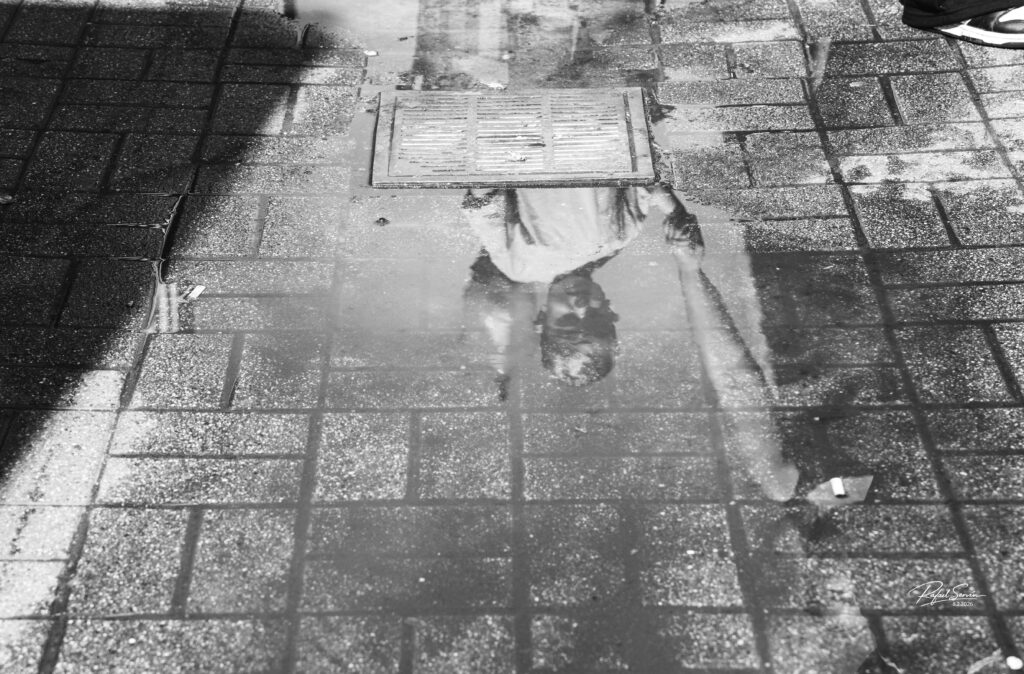
No heredamos el mundo. Heredamos la forma de caminar sobre él.”lEn esta imagen no vemos personas, sino sus reflejos. Una mano adulta guía a una mano infantil sobre un charco donde flotan los rastros de quienes pasaron antes. El agua, oscurecida por la ciudad y marcada por colillas de cigarro, deja de ser un simple charco para convertirse en una metáfora.
La infancia avanza confiando. No distingue aún la diferencia entre el agua limpia y la turbia; simplemente sigue la mano que la sostiene. Ese es el primer acto de fe que hacemos al llegar al mundo.
Con el tiempo descubrimos que nadie comienza desde cero. Todos caminamos sobre las decisiones, los aciertos, los errores y las heridas de quienes estuvieron antes que nosotros.
Cada generación deja algo en el camino.
Y cada niño, sin saberlo, comienza a escribir su historia sobre la huella de otra.
English Translation
We do not inherit the world. We inherit the way we walk upon it.
In this image, we do not see people—we see their reflections. An adult hand guides a child’s hand across a puddle where traces of those who came before still remain. The water, darkened by the city and marked by discarded cigarette butts, ceases to be merely a puddle and becomes a metaphor.
Childhood moves forward with trust. It does not yet know the difference between clean water and murky water; it simply follows the hand that holds it. That is the first act of faith we make when we enter the world.
With time, we come to understand that no one begins from nothing. We all walk upon the decisions, the triumphs, the mistakes, and the wounds of those who came before us.
Every generation leaves something behind.
And every child, without realizing it, begins to write their own story upon the footprints of another.
El Umbral
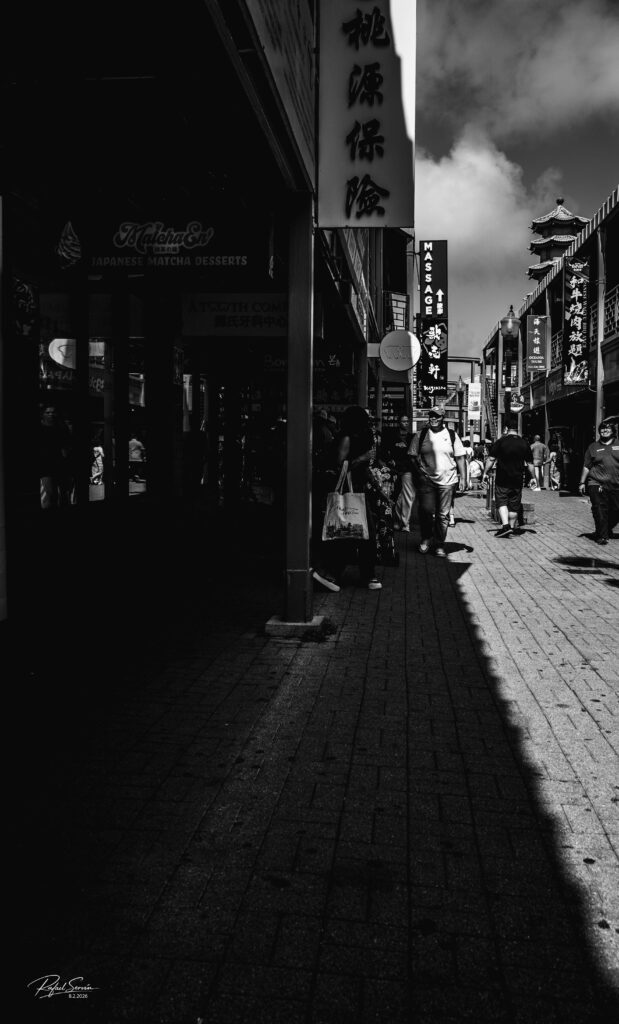
No existen caminos completamente iluminados ni oscuridades absolutas. La vida transcurre en el espacio donde ambas se encuentran. Cada paso que damos es una elección entre lo que dejamos atrás y aquello hacia lo que avanzamos. La ciudad solo hace visible lo que todos llevamos dentro.
Mi interpretación como fotógrafo
Lo que más me gusta de esta imagen es que el sujeto no es una persona, sino la luz misma. Los peatones podrían cambiar y la fotografía seguiría funcionando. La verdadera protagonista es esa frontera perfectamente definida entre sombra y claridad. Es una imagen donde la arquitectura organiza el espacio, pero es la luz la que le da significado.
English Translation
There are no paths that are entirely illuminated, nor darkness that is absolute. Life unfolds in the space where the two meet. Every step we take is a choice between what we leave behind and what we move toward. The city simply makes visible what we all carry within us.
My Interpretation as a Photographer
What I love most about this image is that the subject is not a person, but the light itself. The pedestrians could change, and the photograph would still work. The true protagonist is that perfectly defined boundary between shadow and light. It is an image in which architecture organizes the space, but it is light that gives it meaning.
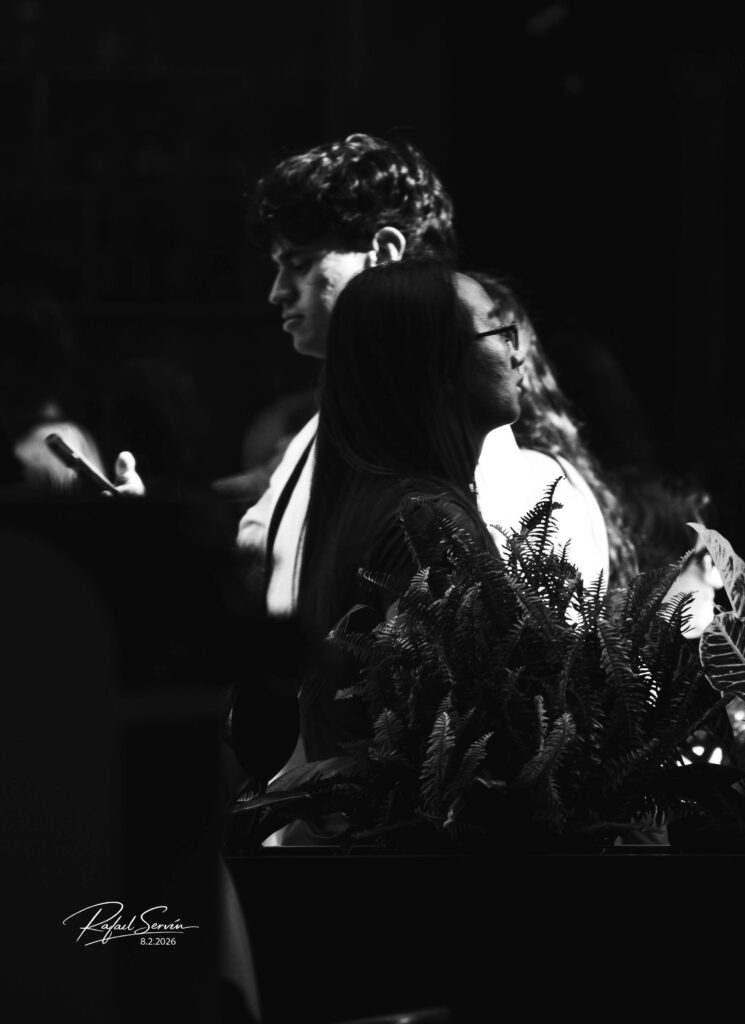
Coexistencia
“No caminamos para vencer al otro. Caminamos para encontrarnos.”
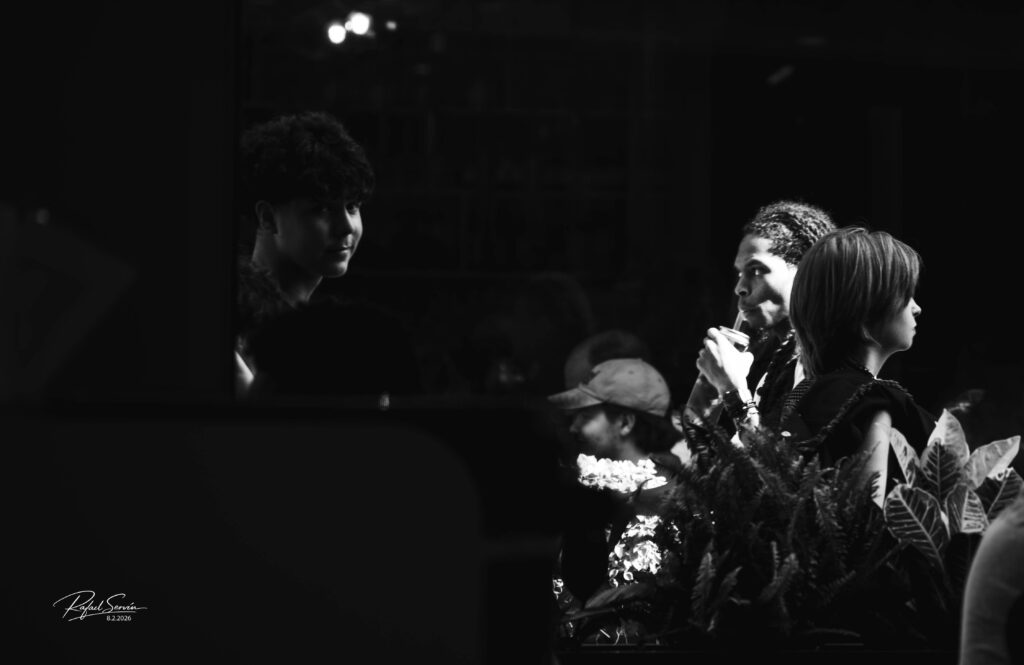
Desde la oscuridad del restaurante observé cómo la luz dibujaba dos perfiles. Un hombre y una mujer compartían el mismo espacio, iluminados por la misma fuente, pero mirando en direcciones distintas.
Vivimos en una época que insiste en separarnos. El hombre frente a la mujer. El machismo frente al feminismo. La razón frente a la emoción. Como si la existencia de uno dependiera de la desaparición del otro.
Sin embargo, la naturaleza nunca ha entendido de bandos.
La planta permanece inmóvil entre ambos. No toma partido. Solo crece. Nos recuerda que la vida no florece en la confrontación, sino en el equilibrio.
La oscuridad no representa el mal; representa aquello que aún no comprendemos. La luz tampoco simboliza la victoria de uno sobre otro. Es la posibilidad de reconocernos.
Porque antes de ser hombres o mujeres, somos seres humanos.
Y quizá el mayor error de nuestra época ha sido olvidar que no fuimos creados para caminar en sentidos contrarios, sino para descubrir que, incluso cuando nuestras miradas parecen alejarse, existe un mismo lugar donde siempre podemos volver a encontrarnos: la luz. “La luz no eligió iluminar a uno más que al otro. Nos recordó que, para existir plenamente, ninguno sobra.
English Translation:
We do not walk to defeat one another. We walk to find one another.
From the darkness of the restaurant, I watched as the light traced two silhouettes. A man and a woman shared the same space, illuminated by the same source, yet looking in opposite directions.
We live in a time that constantly urges us to divide ourselves. Man against woman. Masculinity against feminism. Reason against emotion. As though the existence of one depended on the disappearance of the other.
Yet nature has never understood sides.
The plant stands quietly between them. It takes no position. It simply grows. It reminds us that life does not flourish through confrontation, but through balance.
Darkness does not represent evil; it represents what we have yet to understand. Nor does the light symbolize one person’s victory over another. It is the possibility of recognizing one another.
Because before we are men or women, we are human beings.
And perhaps the greatest mistake of our time has been forgetting that we were not created to walk in opposite directions, but to discover that even when our gazes seem to drift apart, there is one place where we can always find each other again:
the light.
The light did not choose to shine more brightly on one than on the other.
It simply reminded us that, to exist fully, neither of us is unnecessary.
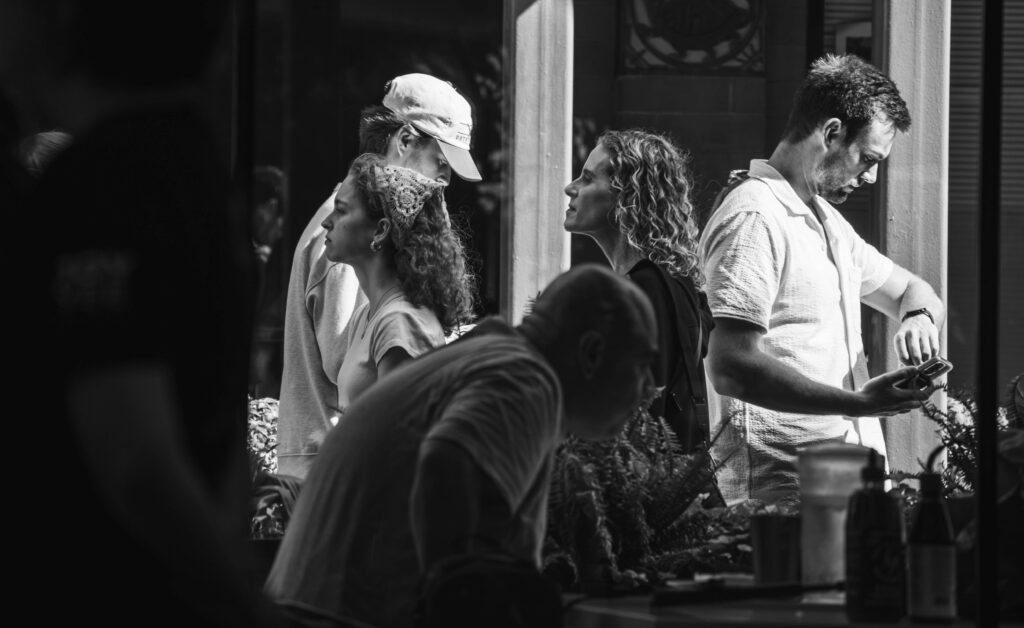
Tiempo
“Nadie camina por el mismo instante, aunque todos compartamos el mismo espacio.”
Hay quienes viven persiguiendo el tiempo, convencidos de que aún pueden alcanzarlo. Otros levantan la mirada hacia el pasado, buscando en la memoria aquello que el presente ya no les ofrece. Algunos avanzan con la serenidad de quien cree que el mañana siempre estará esperándolo, mientras otros sienten el peso de cada segundo porque han comprendido que el tiempo no se acumula: se consume.
En esta imagen, cinco personas comparten un mismo lugar, pero ninguna habita el mismo momento.
El hombre observa su reloj como si pudiera negociar unos minutos más con la vida. El anciano se incorpora con la urgencia de quien sabe que cada paso tiene un valor distinto cuando el camino comienza a acortarse. La juventud avanza sin detenerse, con la fuerza de quien todavía cree que el horizonte nunca termina. Y dos mujeres parecen volver la mirada hacia atrás, como si el pasado aún tuviera preguntas sin responder.
Quizá esa sea la mayor ilusión del ser humano: creer que todos vivimos el mismo tiempo. No es así.
Cada persona lleva un reloj que nadie más puede ver.
Uno marca los sueños que aún no llegan.
Otro cuenta las oportunidades perdidas.
Otro recuerda los abrazos que ya no volverán.
Y alguno más mide los segundos que todavía quedan.
El tiempo no hace distinciones. No pregunta quién está preparado ni espera a quien desea un poco más de vida. Simplemente avanza, silencioso, mientras nosotros decidimos en qué dirección mirar.
Tal vez el verdadero sentido de existir no sea correr detrás del tiempo ni intentar regresar al pasado, sino comprender que el único instante que realmente nos pertenece es aquel que estamos viviendo.
Porque, al final, todos compartimos el mismo mundo…
pero jamás el mismo tiempo.
English Translation
No one walks through the same moment, even when we share the same space.
Some spend their lives chasing time, convinced they can still catch up to it. Others lift their gaze toward the past, searching their memories for what the present can no longer provide. Some move forward with the calm confidence of those who believe tomorrow will always be waiting for them, while others feel the weight of every passing second because they have come to understand that time is not something we accumulate—it is something we consume.
In this image, five people share the same place, yet none of them inhabits the same moment.
One man studies his watch as though he could bargain with life for a few more minutes. An elderly man rises with the urgency of someone who knows that every step carries a different meaning when the road ahead begins to grow shorter. Youth moves forward without hesitation, with the confidence of those who still believe the horizon has no end. And two women seem to glance back, as if the past still held questions left unanswered.
Perhaps that is humanity’s greatest illusion: believing that we all live the same time.
We do not.
Each person carries a clock that no one else can see.
One measures the dreams that have yet to arrive.
Another counts the opportunities that slipped away.
Another remembers the embraces that will never return.
And still another marks the seconds that remain.
Time makes no distinctions. It does not ask who is ready, nor does it wait for those who wish for a little more life. It simply moves forward, quietly, while we decide which direction to face.
Perhaps the true meaning of existence is not to chase time or long to return to the past, but to understand that the only moment that truly belongs to us is the one we are living now.
Because, in the end, we all share the same world…
but never the same time.
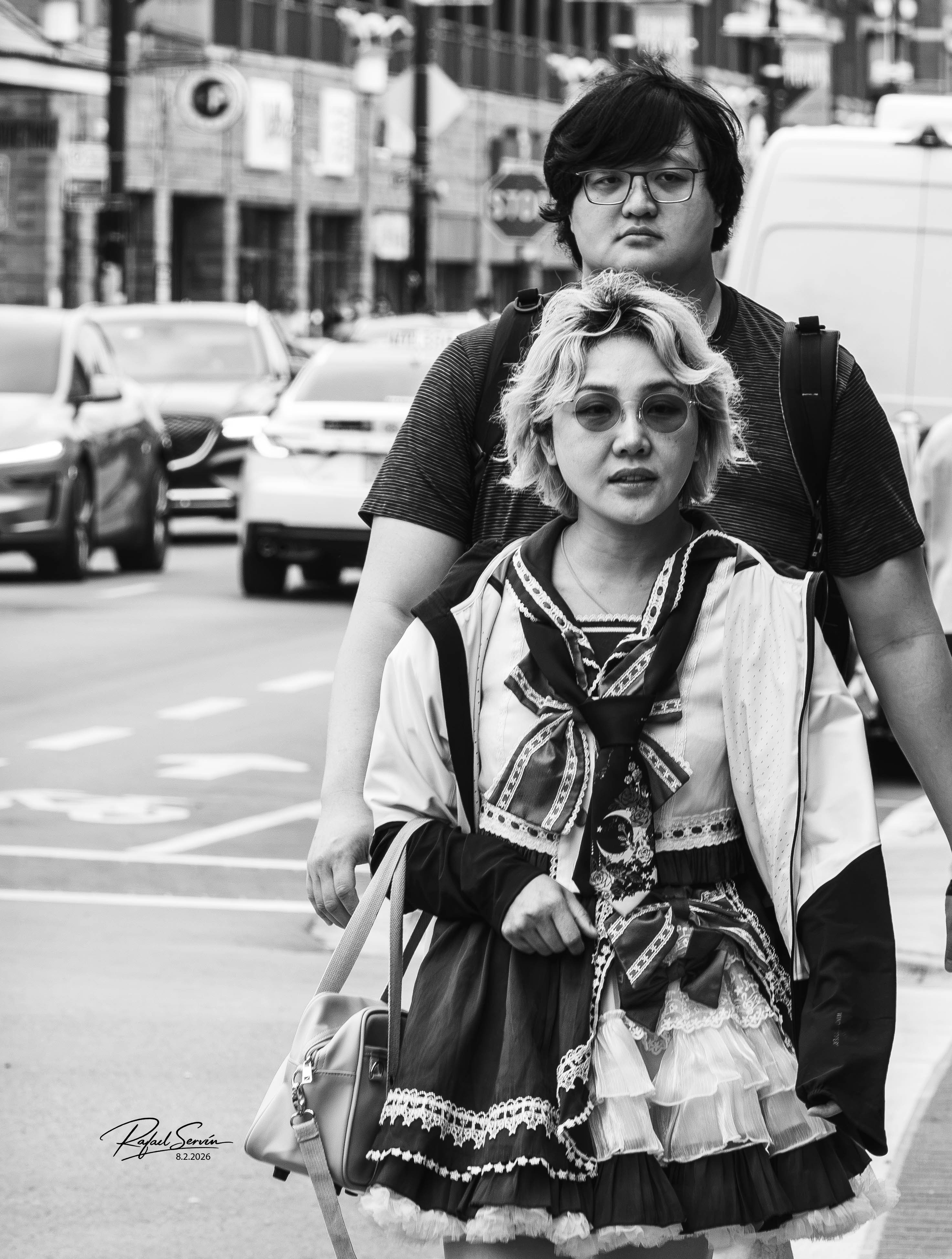
Identidad
“La identidad no siempre se hereda. Muchas veces se construye con el valor de ser diferente.”
En una ciudad donde miles de personas recorren las mismas calles, cada individuo transita un camino invisible: el de descubrir quién es.
Algunos encuentran refugio en la discreción. Otros convierten su apariencia en una declaración. Cada elección —la forma de vestir, de caminar, de mirar al mundo— es una conversación silenciosa entre lo que somos y lo que deseamos mostrar.
La identidad no nace cuando alguien nos pone un nombre. Nace cuando dejamos de vivir para cumplir las expectativas ajenas y comenzamos a habitar nuestra propia verdad.
La ciudad observa sin detenerse. Los semáforos cambian, los automóviles continúan su marcha y las multitudes siguen avanzando. Sin embargo, entre ese movimiento constante, cada persona libra una batalla distinta: la de ser aceptada sin dejar de ser auténtica.
Porque la identidad no consiste en parecerse a los demás. Consiste en tener el valor de no desaparecer entre ellos.
English Translation
Identity is not always inherited. More often, it is built through the courage to be different.
In a city where thousands of people walk the same streets, each person follows an invisible path: the journey of discovering who they truly are.
Some find comfort in blending in. Others turn their appearance into a statement. Every choice—the way we dress, the way we walk, the way we look at the world—is a quiet conversation between who we are and who we choose to reveal.
Identity is not born the moment someone gives us a name. It is born when we stop living to fulfill the expectations of others and begin to inhabit our own truth.
The city watches without pausing. Traffic lights change, cars continue on their way, and crowds keep moving forward. Yet within that constant motion, every person fights a different battle: the struggle to be accepted without surrendering their authenticity.
Because identity is not about becoming like everyone else.
It is about having the courage not to disappear among them.
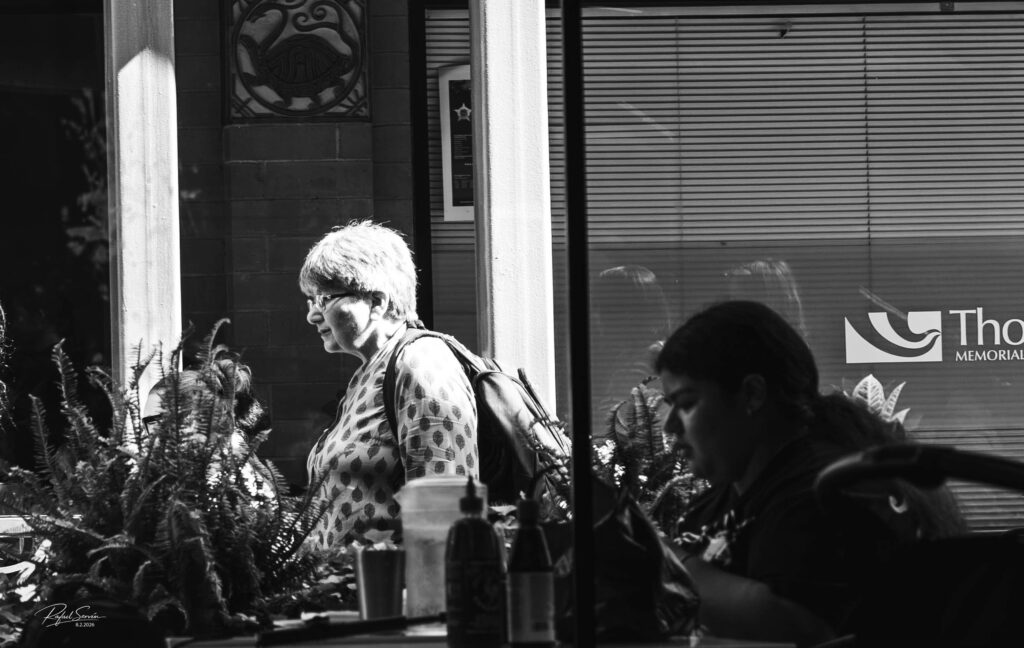
Silencios
“No todo lo que pesa se ve. No todo lo que duele se dice.”
La ciudad está llena de voces, motores y pasos apresurados. Sin embargo, el ruido nunca ha sido capaz de romper el silencio que cada ser humano lleva consigo.
Una mujer permanece en la penumbra. Otra atraviesa la luz. Las separan apenas unos metros, pero podrían estar habitando universos distintos. Una carga recuerdos. La otra sostiene pensamientos. Ambas continúan caminando.
Aprendimos a preguntar cómo estás, pero pocas veces esperamos la verdad. Nos acostumbramos a mirar los rostros, sin imaginar las historias que han moldeado cada gesto, cada postura y cada mirada.
Todos cargamos un silencio.
Algunos guardan el nombre de quien ya no está.
Otros esconden sueños que nunca pudieron cumplir.
Hay silencios hechos de culpa, de esperanza, de miedo o de amor.
La vida continúa, y nosotros también.
Caminamos entre multitudes fingiendo ligereza, mientras el peso más grande viaja donde nadie puede verlo: en el interior.
Porque las heridas más profundas no sangran.Guardan silencio.
English Translation
Not everything that weighs us down can be seen. Not every pain is spoken.
The city is filled with voices, engines, and hurried footsteps. Yet all the noise in the world has never been enough to break the silence every human being carries within.
One woman remains in the shadows. Another walks through the light. Only a few steps separate them, yet they could be inhabiting entirely different worlds. One carries memories. The other carries thoughts. Both continue walking.
We have learned to ask, “How are you?” Yet rarely do we wait for the truth. We have grown accustomed to looking at faces without imagining the stories that have shaped every expression, every posture, every gaze.
We all carry a silence.
Some carry the name of someone who is no longer here.
Others hide dreams they never had the chance to fulfill.
There are silences born of guilt, of hope, of fear, or of love.
Life goes on, and so do we.
We walk among crowds pretending to be light, while our greatest burdens travel where no one can see them: within.
Because the deepest wounds do not bleed.
They remain silent.
Pausa
“La vida no siempre nos detiene para castigarnos. A veces nos detiene para recordarnos que seguimos vivos.”
Vivimos convencidos de que avanzar es la única forma de existir. Corremos detrás del tiempo, de los sueños, de las obligaciones y de las metas, hasta olvidar que incluso el corazón necesita detenerse entre un latido y otro para seguir dando vida.
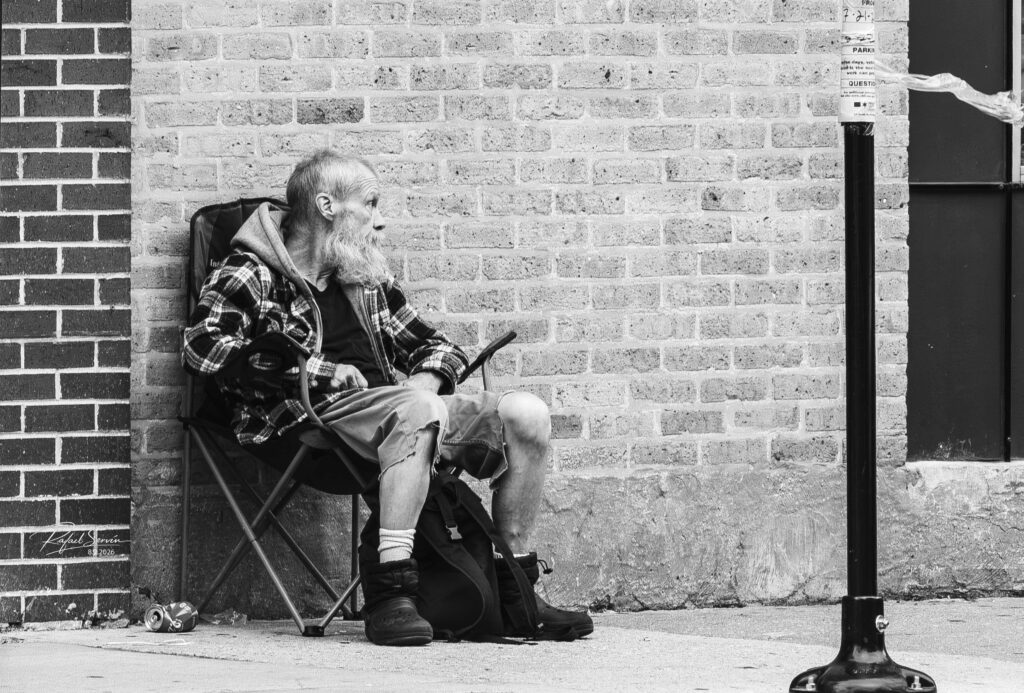
En medio del movimiento constante de la ciudad, un hombre permanece sentado. No sabemos si descansa, espera o simplemente observa. La fotografía no responde esas preguntas, porque nunca fueron las importantes.
Lo verdaderamente importante es reconocer que todos llegamos a un momento en el que la vida nos obliga a hacer una pausa.
No todas las pausas significan derrota.
Algunas son el instante necesario para respirar después de una pérdida.
Otras llegan para ordenar los pensamientos, recuperar fuerzas o aceptar aquello que no podemos cambiar.
Desde afuera, una pausa puede parecer inmovilidad.
Desde adentro, puede ser el acto más valiente de todos.
Porque hay momentos en los que seguir adelante no consiste en caminar más rápido. Consiste en tener el valor de detenerse.
English Translation
Life does not always stop us to punish us. Sometimes it stops us to remind us that we are still alive.
We live convinced that moving forward is the only way to exist. We chase time, dreams, responsibilities, and ambitions until we forget that even the heart must pause between one beat and the next in order to keep giving life.
Amid the constant motion of the city, one man remains seated. We do not know whether he is resting, waiting, or simply observing. The photograph does not answer those questions, because they were never the important ones.
What truly matters is recognizing that we all reach a moment when life compels us to pause.
Not every pause is a defeat.
Some are the breath we need after loss.
Others arrive to help us gather our thoughts, restore our strength, or accept what we cannot change.
From the outside, a pause may look like stillness.
From within, it may be the bravest act of all.
Because there are moments when moving forward does not mean walking faster.
It means having the courage to stop.
Conexión
“Toda historia comienza cuando una mirada deja de pasar de largo.”
En una ciudad donde miles de rostros se cruzan cada día, la mayoría de las personas pasan unas junto a otras sin dejar huella. Caminamos entre desconocidos convencidos de que somos invisibles.
Pero, de vez en cuando, sucede algo extraordinario.
El objetivo de una cámara encuentra una mirada.
Durante una fracción de segundo, fotógrafo y desconocido dejan de ser extraños. No existe una palabra, un saludo o una presentación. Solo un reconocimiento silencioso entre quien observa y quien, por primera vez, sabe que está siendo observado.
Ese instante es irrepetible.
La fotografía no nace cuando el obturador se dispara. Nace cuando dos miradas se encuentran y aceptan, aunque sea por un segundo, la existencia del otro.
En ese momento desaparece el anonimato.
La cámara deja de ser un objeto y se convierte en un puente.
Porque toda conexión humana comienza de la misma manera: alguien deja de mirar el mundo… para mirar a otra persona.
Y quizá esa sea la misión más profunda de la fotografía:
demostrar que, incluso entre millones de desconocidos, basta un cruce de miradas para recordar que ninguno de nosotros es realmente invisible.
Enlish Translation
Every story begins the moment a glance no longer passes by.
In a city where thousands of faces cross paths each day, most people pass one another without leaving a trace. We move among strangers, convinced that we are invisible.
But every now and then, something extraordinary happens.
The lens of a camera meets a person’s gaze.
For a fraction of a second, the photographer and the stranger cease to be strangers. There is no greeting, no conversation, no introduction—only a silent recognition between the one who observes and the one who, for the first time, realizes they are being seen.
That moment can never be repeated.
A photograph is not born when the shutter is released. It is born the instant two gazes meet and, if only for a second, acknowledge each other’s existence.
In that moment, anonymity disappears.
The camera ceases to be an object and becomes a bridge.
Because every human connection begins the same way: someone stops looking at the world…
and begins looking at another person.
And perhaps that is photography’s deepest purpose:
to remind us that even among millions of strangers, a single exchange of glances is enough to remember that none of us is truly invisible.
Capturada
“Toda fotografía cuenta dos historias: la del que mira… y la del que cree estar mirando.”
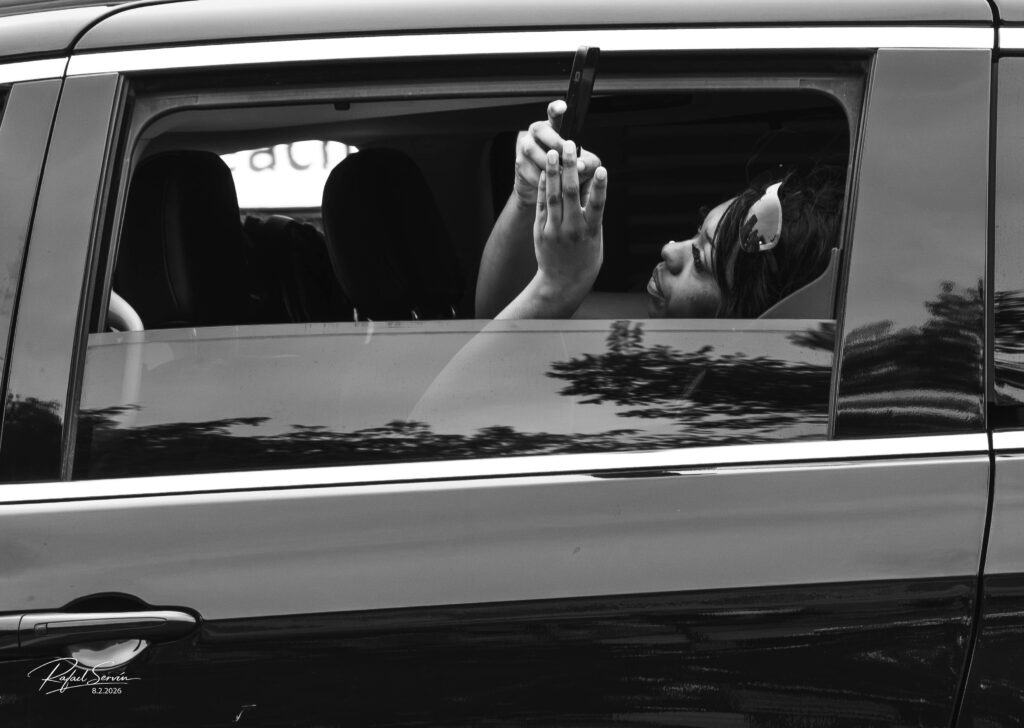
Ella levantó su teléfono para detener un instante.
Buscaba conservar un paisaje, una emoción o un recuerdo antes de que desapareciera.
Nunca imaginó que, en ese mismo momento, alguien también la estaba observando.
Mientras intentaba capturar una imagen, ella se convirtió en una.
Esa es la paradoja de la fotografía.
Creemos que somos quienes observamos el mundo.
Pero, en realidad, el mundo también nos observa.
Cada vez que dirigimos una cámara hacia la vida, también dejamos una parte de nosotros frente al objetivo de alguien más.
Porque ninguna fotografía pertenece por completo al fotógrafo.
Siempre existe otra mirada.
Otro ángulo.
Otra historia.
Y, a veces, la imagen más importante no es la que decidimos tomar…
…sino aquella en la que terminamos existiendo sin saberlo.
CAPTURADA
“Buscaba capturar un instante… y terminó convirtiéndose en él.”
English Translation
Every photograph tells two stories: the one of the person who is looking… and the one of the person who believes they are.
She raised her phone to preserve a fleeting moment.
She wanted to hold on to a landscape, an emotion, or a memory before it disappeared.
She never imagined that, in that very same moment, someone else was watching her.
While she was trying to capture an image…
she became one.
That is the paradox of photography.
We believe we are the ones observing the world.
But in truth, the world is observing us as well.
Every time we point a camera toward life, we leave a part of ourselves within someone else’s frame.
Because no photograph ever belongs entirely to the photographer.
There is always another perspective.
Another angle.
Another story.
And sometimes, the most important photograph is not the one we choose to take…
…but the one in which we unknowingly become the subject.
CAPTURED
“She set out to capture a moment… and ended up becoming one.”
La Búsqueda
“Toda fotografía existe mucho antes de que el obturador se dispare.”
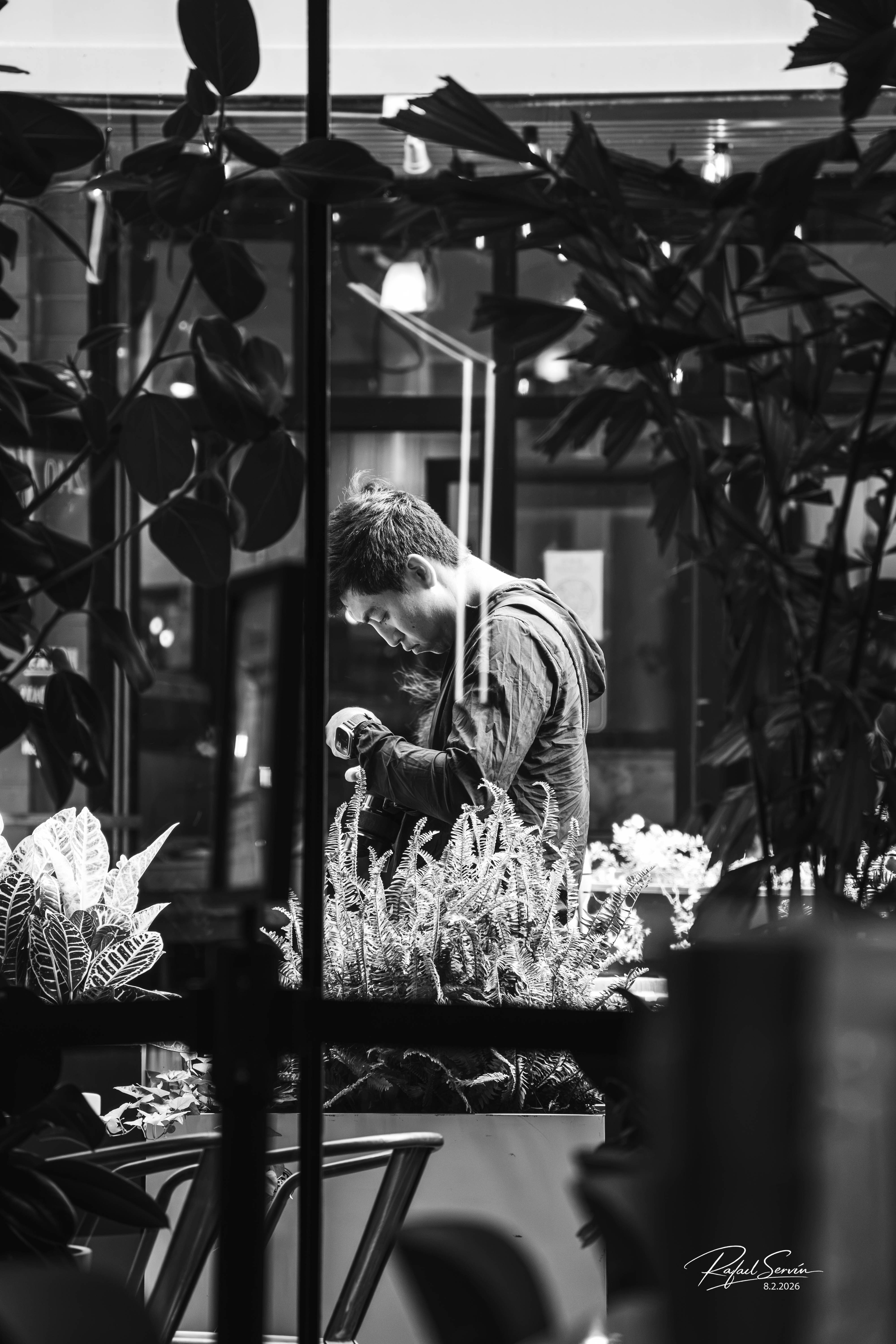
Antes de levantar la cámara, el fotógrafo permanece en silencio. No está buscando un rostro ni un paisaje; está esperando que el mundo le revele aquello que pasa inadvertido para los demás.
La búsqueda no consiste en encontrar una imagen.
Consiste en descubrir un significado.
Cada paso, cada sombra y cada reflejo son posibilidades. La cámara aún descansa entre las manos, porque la verdadera fotografía todavía no ha nacido. Primero debe hacerlo en la imaginación.
Solo existe la intuición.
Esa voz silenciosa que le dice al fotógrafo que siga caminando, que observe un instante más, que espere la luz adecuada o que permanezca inmóvil porque algo está a punto de suceder.
La diferencia entre tomar una fotografía y crear una imagen no está en el momento del disparo.
Está en la capacidad de reconocer aquello que los demás aún no han visto.
Porque el fotógrafo no sale a buscar fotografías.
Sale a buscar historias que todavía no tienen imagen.
Y cuando finalmente las encuentra…
el disparo de la cámara es apenas el último paso de una búsqueda que comenzó mucho antes, en el lugar donde nacen todas las grandes fotografías:
la mirada.
English Translation
Every photograph exists long before the shutter is released.
Before lifting the camera, the photographer stands in silence. They are not searching for a face or a landscape; they are waiting for the world to reveal what so often goes unnoticed by everyone else.
The search is not about finding an image.
It is about discovering meaning.
Every step, every shadow, and every reflection holds possibility. The camera still rests in the photographer’s hands because the true photograph has not yet been born. It must first come to life in the imagination.
At that moment, only intuition exists.
That quiet voice telling the photographer to keep walking, to watch a little longer, to wait for the right light, or to remain perfectly still because something is about to happen.
The difference between taking a photograph and creating an image does not lie in the moment the shutter is pressed.
It lies in the ability to recognize what others have not yet seen.
Because photographers do not go out in search of photographs.
They go in search of stories that have not yet found an image.
And when they finally discover them…
the click of the shutter is merely the final step in a journey that began long before—in the place where every great photograph is born:
the eye behind the lens.
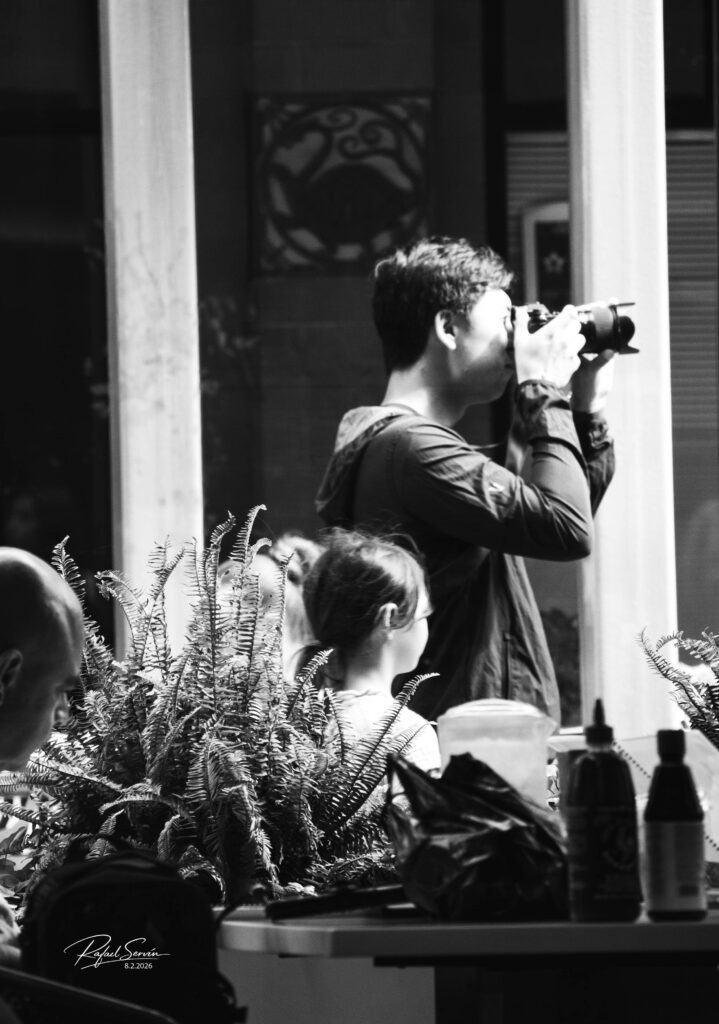
La Mirada
“La cámara no nos enseña a ver. Nos enseña a descubrir.”
Cuando el fotógrafo lleva el ojo al visor, el mundo deja de ser el mismo. La realidad continúa intacta, pero la mirada cambia.
A través del objetivo aparecen detalles que antes parecían invisibles: un gesto fugaz, una sombra que dibuja una historia, una lágrima contenida, una mano que busca otra, una mirada perdida entre la multitud. Elementos que siempre estuvieron ahí, esperando a que alguien los descubriera.
No es la cámara la que revela esos instantes.
Es la sensibilidad de quien aprende a mirar más allá de lo evidente.
Por eso, fotografiar no consiste únicamente en registrar lo que existe frente al lente. Consiste en revelar aquello que el ojo apresurado suele dejar escapar.
Cada fotografía es un recordatorio de que el mundo está lleno de historias invisibles.
Y que muchas de ellas solo aparecen cuando alguien decide detenerse a mirar con atención.
Porque hay detalles que nunca podrán verse a simple vista.
Hasta que una mirada los revela.
“La cámara no crea la realidad; revela la que los demás pasaron de largo.”
English Translation
The camera does not teach us how to see. It teaches us how to discover.
The moment a photographer lifts the camera to their eye, the world is no longer the same. Reality itself remains unchanged, but the way we see it is transformed.
Through the lens, details emerge that once seemed invisible: a fleeting gesture, a shadow that tells a story, a restrained tear, a hand reaching for another, a gaze lost within the crowd. They were always there, waiting for someone to notice them.
It is not the camera that reveals these moments.
It is the sensitivity of the person who has learned to look beyond the obvious.
That is why photography is more than recording what exists in front of the lens.
It is about revealing what the hurried eye so often lets slip away.
Every photograph is a reminder that the world is filled with unseen stories.
And that many of them reveal themselves only when someone chooses to pause and truly look.
Because there are details that can never be seen at a glance…
until someone’s vision brings them into the light.
The camera does not create reality; it reveals the reality everyone else walked past.
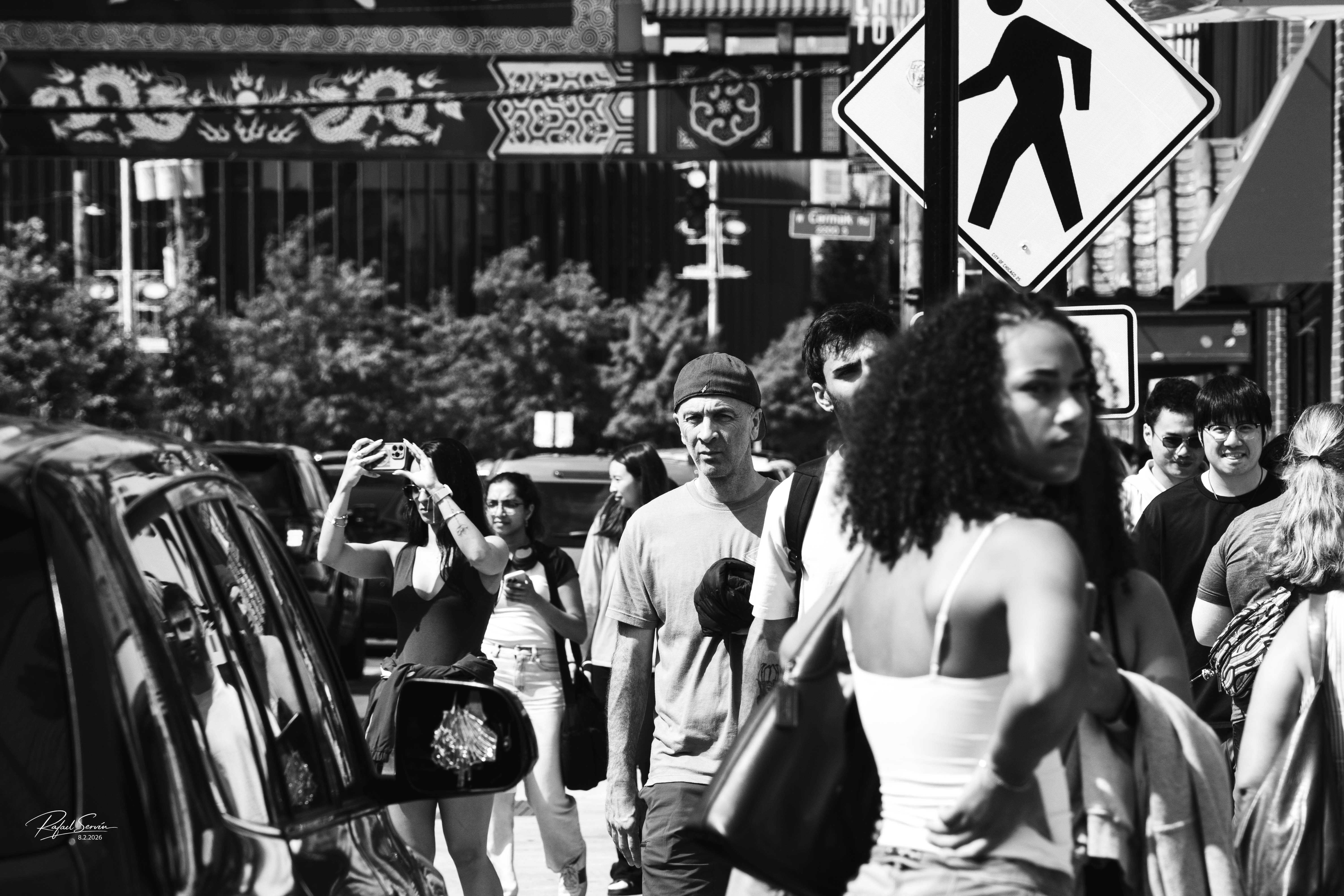
No Te Detengas. Camina.
Hubo quien decidió detenerse para guardar un recuerdo.
Hubo quien siguió avanzando sin mirar a los lados.
Hubo quien volvió la cabeza, como si el pasado todavía pudiera responder una pregunta.
Hubo quien caminó sin levantar la vista, confiando en que el siguiente paso bastaría para encontrar el camino.
Y mientras cada uno vivía su propia historia, el tiempo continuó haciendo lo único que sabe hacer:
seguir adelante.
La vida rara vez nos obliga a elegir entre avanzar o detenernos.
Esa decisión casi siempre la tomamos nosotros.
Nos detenemos por miedo.
Por nostalgia.
Por una distracción.
Por una duda.
Por querer conservar un instante que ya comenzó a desaparecer.
Sin embargo, el mundo nunca interrumpe su marcha.
Cada segundo que dejamos pasar también sigue caminando.
Quizá el verdadero desafío de la vida no sea encontrar el camino perfecto.
Quizá sea tener el valor de dar el siguiente paso, incluso cuando no sabemos con certeza hacia dónde nos conduce.
Porque hay mensajes que están frente a nosotros todos los días.
Lo difícil…
es aprender a verlos.
English Translation
Someone chose to pause and preserve a memory.
Someone else kept walking without looking to either side.
Someone turned back, as though the past might still answer an unanswered question.
Someone walked on without ever lifting their gaze, trusting that the next step alone would be enough to find the way.
And while each person lived their own story, time continued doing the only thing it has ever known how to do:
move forward.
Life rarely forces us to choose between moving on and standing still.
More often than not, that choice is ours.
We pause because of fear.
Because of nostalgia.
Because of a distraction.
Because of uncertainty.
Because we want to hold on to a moment that has already begun to fade.
Yet the world never stops moving.
Every second we allow to pass continues on without us.
Perhaps the true challenge of life is not finding the perfect path.
Perhaps it is having the courage to take the next step, even when we do not know exactly where it will lead.
Because there are messages placed before us every single day.
The difficult part…
is learning how to see them.
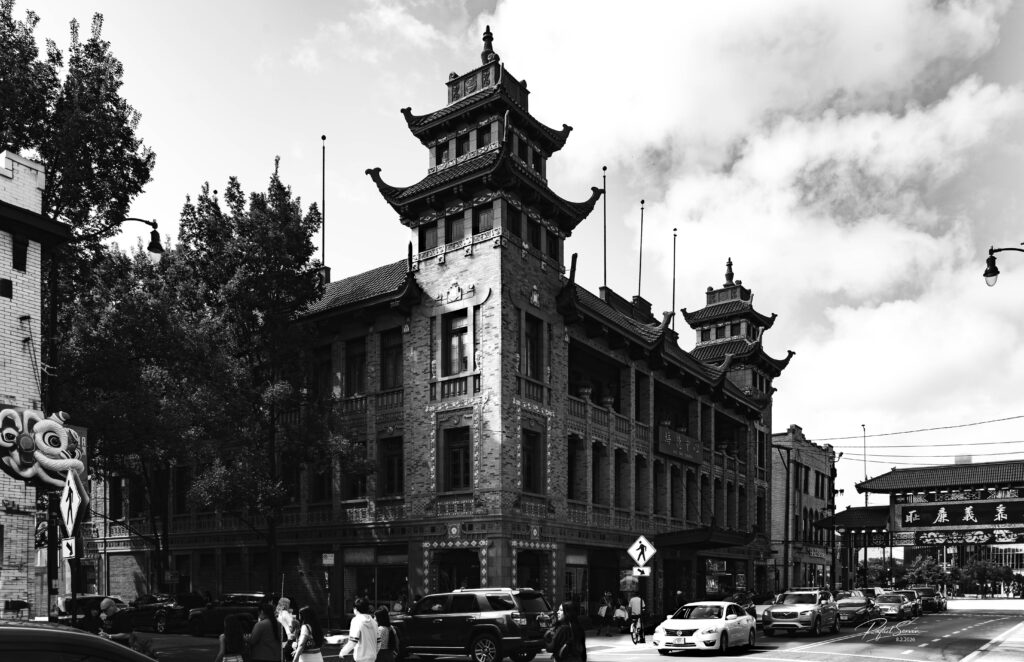
Cultura
“Hay lugares que no solo ocupan un espacio. Conservan un origen.”
Una ciudad crece cuando recibe nuevas culturas. Pero una cultura sobrevive cuando se niega a desaparecer.
Entre el acero y el concreto de una de las ciudades más grandes del mundo, este edificio permanece como un recordatorio de que la distancia nunca ha sido suficiente para borrar las raíces.
No fue construido únicamente para admirarse.
Fue levantado para recordar.
Para decirles a quienes llegaron desde lejos que el hogar también puede existir al otro lado del océano.
Porque la identidad no vive en un país.
Vive en la memoria.
En las tradiciones que se conservan.
En la arquitectura que resiste al tiempo.
En el idioma que aún se escucha entre las calles.
En la comida que reúne a las familias.
Y en el orgullo de seguir siendo quienes somos, aun cuando el mundo que nos rodea sea completamente diferente.
El verdadero progreso no consiste en olvidar de dónde venimos.
Consiste en avanzar sin dejar atrás aquello que nos dio un nombre.
Porque hay personas que cambian de ciudad.
Hay quienes cambian de idioma.
Hay quienes cambian de vida.
Pero solo permanecen íntegros aquellos que nunca renuncian a su identidad.
“Podemos cruzar fronteras sin dejar que nuestras raíces se queden atrás.”
English Translation
Someone chose to pause and preserve a memory.
Someone else kept walking without looking to either side.
Someone turned back, as though the past might still answer an unanswered question.
Someone walked on without ever lifting their gaze, trusting that the next step alone would be enough to find the way.
And while each person lived their own story, time continued doing the only thing it has ever known how to do:
move forward.
Life rarely forces us to choose between moving on and standing still.
More often than not, that choice is ours.
We pause because of fear.
Because of nostalgia.
Because of a distraction.
Because of uncertainty.
Because we want to hold on to a moment that has already begun to fade.
Yet the world never stops moving.
Every second we allow to pass continues on without us.
Perhaps the true challenge of life is not finding the perfect path.
Perhaps it is having the courage to take the next step, even when we do not know exactly where it will lead.
Because there are messages placed before us every single day.
The difficult part…
is learning how to see them.
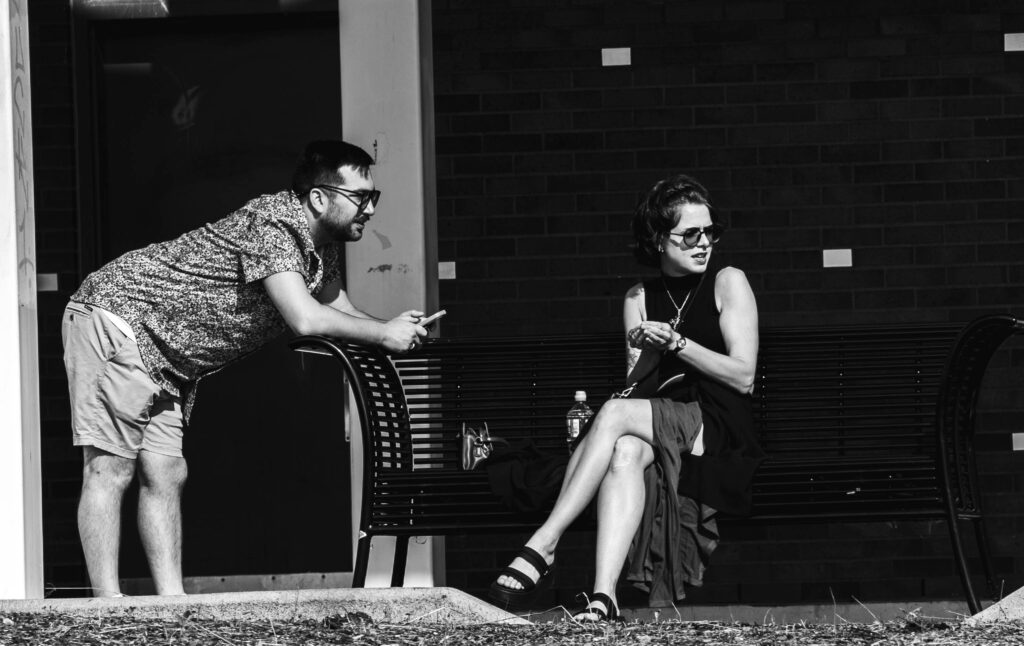
Sintonía
“Hablar es sencillo. Encontrarse en la misma frecuencia es lo verdaderamente difícil.”
Dos personas comparten una banca, un instante y, quizá, una conversación.
Él acorta la distancia con todo su cuerpo, como si quisiera acercarse a una respuesta.
Ella permanece presente, pero su mirada se dirige hacia otro lugar, como si algo fuera del encuadre hubiera reclamado su atención.
No sabemos qué ocurrió antes.
No sabemos qué sucederá después.
Solo conocemos ese fragmento de tiempo en el que dos personas intentan coincidir.
Las relaciones humanas rara vez fracasan por la falta de palabras.
Con más frecuencia se desgastan porque, aun estando frente al otro, dejamos de mirar en la misma dirección.
La verdadera cercanía no se mide en centímetros.
Se mide en la capacidad de compartir un mismo instante.
Porque el amor, la amistad y cualquier vínculo humano nacen cuando dos personas dejan de ocupar únicamente el mismo espacio…
…y comienzan a habitar el mismo momento.
English Translation
Speaking is easy. Finding one another on the same wavelength is the true challenge.
Two people share a bench, a moment, and perhaps a conversation.
He leans in with his whole body, as though trying to move closer to an answer.
She remains beside him, yet her gaze drifts elsewhere, as if something beyond the frame has quietly claimed her attention.
We do not know what happened before.
We do not know what will happen next.
All we know is this brief fragment of time in which two people are trying to meet.
Human relationships rarely fail because of a lack of words.
More often, they slowly wear away because, even while standing before one another, we stop looking in the same direction.
True closeness is not measured in inches.
It is measured by the ability to share the same moment.
Because love, friendship, and every meaningful human connection begin when two people stop merely occupying the same space…
…and begin inhabiting the same moment.
Colección INTERSECCIONES
Fotografías de Rafael Servín
Cuando vi la primera fotografía del hombre sentado pensé: ¿Qué espera?
Con Herencia pensé: ¿Qué les estamos heredando a quienes vienen detrás?
Con Silencios: ¿Qué carga esa persona que nadie alcanza a ver?
Con Conexión: ¿Qué ocurre cuando una mirada encuentra otra?
Con Pausa: ¿En qué momento detenerse deja de ser perder el tiempo y se convierte en parte del camino?
Con No te detengas. Camina. ¿Cuántas veces dejamos que una distracción decida el rumbo de nuestra vida?
Eso no es fotografía callejera. Eso es filosofía visual.
Fotografías y textos de Rafael Servín.
Photography and text by Rafael Servín.
Haz clic aquí para ver la colección completa de Intersecciones.
Click here to access the full Intersections Collection.
Originally written in Spanish by Rafael Servin. Spanish translation by RS Photography